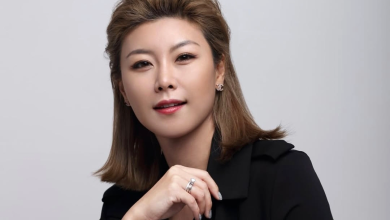
Julie H.C.
Contemporary Textile & Mixed-Media Artist
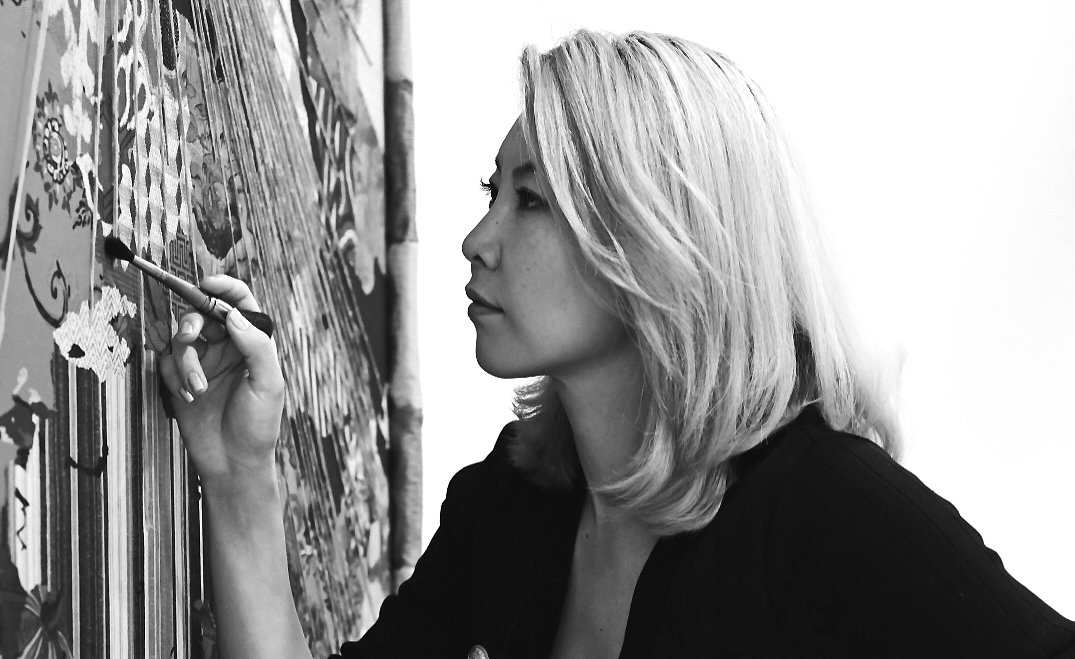 Julie H.C. is a South Korean contemporary textile and mixed-media artist based in Bangkok, Thailand. Her practice explores the relationship between cultural heritage, material memory and contemporary identity, transforming historically significant textiles into expressive sculptural compositions.
Working primarily with archival silk and fabrics from the Jim Thompson collection, Julie approaches textiles as more than decorative materials. Each fabric carries traces of history, craftsmanship and cultural identity. Through a meticulous process of hand-stitching, layering, folding and assemblage, she reinterprets these materials, allowing their inherited patterns and textures to evolve into new artistic forms.
Her work occupies a space between textile art, sculpture and contemporary assemblage. Drawing inspiration from the legacy of found-object art and post-war assemblage movements, Julie explores how materials associated with the past can be liberated from their original context and given renewed meaning. The resulting works possess an intriguing sense of movement and dimensionality, balancing the delicacy of silk with the structural presence of sculptural form.
Cultural Heritage as a Contemporary Language
A defining characteristic of Julie’s artistic language is the dialogue between her Korean heritage and the cultural environment of Thailand. Having experienced life across Korea, Europe, North America and Southeast Asia, she draws upon a broad spectrum of cultural influences, creating work that reflects the complexities of belonging, displacement and cultural connection.
The traditional Korean fan, particularly its historical associations with the Joseon Dynasty, is a recurring motif in her practice. Once a symbol of refinement, social standing and scholarly expression, the fan becomes, in Julie’s interpretation, a metaphor for femininity, autonomy and quiet resilience.
Through its graceful structure and inherent capacity for movement, the fan provides a visual framework for exploring the relationship between strength and fragility, visibility and concealment, and tradition and individual expression.
The Poetry of Silk: A Dialogue with Jim Thompson
Central to Julie’s recent practice is her engagement with the textile heritage of Jim Thompson, whose contribution to the preservation and international recognition of Thai silk provides an important cultural context for her work.
By incorporating carefully selected archival Jim Thompson textiles, Julie establishes a dialogue between the historical significance of Thai silk and the possibilities of contemporary artistic expression.
She is particularly drawn to the distinctive patterns, tactile qualities and visual narratives embedded within these fabrics. Rather than preserving them as static historical objects, she transforms them through an intricate process of reconstruction, allowing the original textiles to acquire new identities and dimensions.
The juxtaposition of traditional Thai craftsmanship with contemporary sculptural techniques creates a meeting point between heritage and innovation. Silk becomes both medium and metaphor: a material through which memory is preserved, cultures intersect and new narratives emerge.
Her practice also reflects a sensitivity towards sustainability and the preservation of craftsmanship. By reimagining existing and archival materials, she considers how the artistic reinvention of textiles can extend their cultural and aesthetic lives.
Material, Movement and the Feminine Narrative
Julie’s work is distinguished by its exploration of movement within an inherently delicate medium. Through the interplay of fabric, thread, structure and form, her compositions suggest an almost organic rhythm, as though the textiles retain a life and energy beyond their physical materiality.
The recurring themes of femininity and personal autonomy are approached with subtlety rather than overt declaration. Her works celebrate the enduring strength found in delicacy, the significance of inherited traditions and the freedom to reinterpret one’s own cultural identity.
In this context, the fan becomes more than a historical reference. It is a personal emblem through which Julie examines the evolving position of women, the relationship between individual identity and collective heritage, and the quiet power of self-expression.
RESONANCE — A New Artistic Chapter
In June 2026, Julie H.C. presented her debut solo exhibition, RESONANCE, at West Eden Gallery in Bangkok, curated by Camilla Russell.
The exhibition brought together a body of sculptural textile works created primarily with archival Jim Thompson fabrics. It represented an important development in her artistic practice, bringing together her exploration of Korean cultural references, Thai textile heritage, found-object assemblage and contemporary feminist thought.
Inspired in part by her childhood experiences between Korea and North America, RESONANCE explored how seemingly different cultural environments can coexist within personal memory, forming a shared emotional and artistic language.
Through the transformation of historic textiles into contemporary compositions, the exhibition invited audiences to consider the relationship between memory and reinvention, heritage and individuality, and the enduring resonance of materials across generations.
A portion of the exhibition proceeds also supported Inspiring Girls Thailand, reflecting the artist’s interest in extending creative practice beyond the gallery and contributing to opportunities for the next generation.
An Ongoing Exploration
For Julie H.C., the act of making art is an ongoing process of discovery, preservation and transformation. Her work seeks to establish connections between different cultural histories while questioning the boundaries between traditional craft and contemporary art.
By bringing together the rich textile heritage of Thailand and the visual traditions of Korea, she creates a distinctive artistic vocabulary that is at once personal and cross-cultural.
Ultimately, her work is an invitation to look beyond the surface of a material and consider the histories, identities and human experiences it contains. Through silk, she gives inherited stories a new form, allowing the past to remain present while opening possibilities for the future.